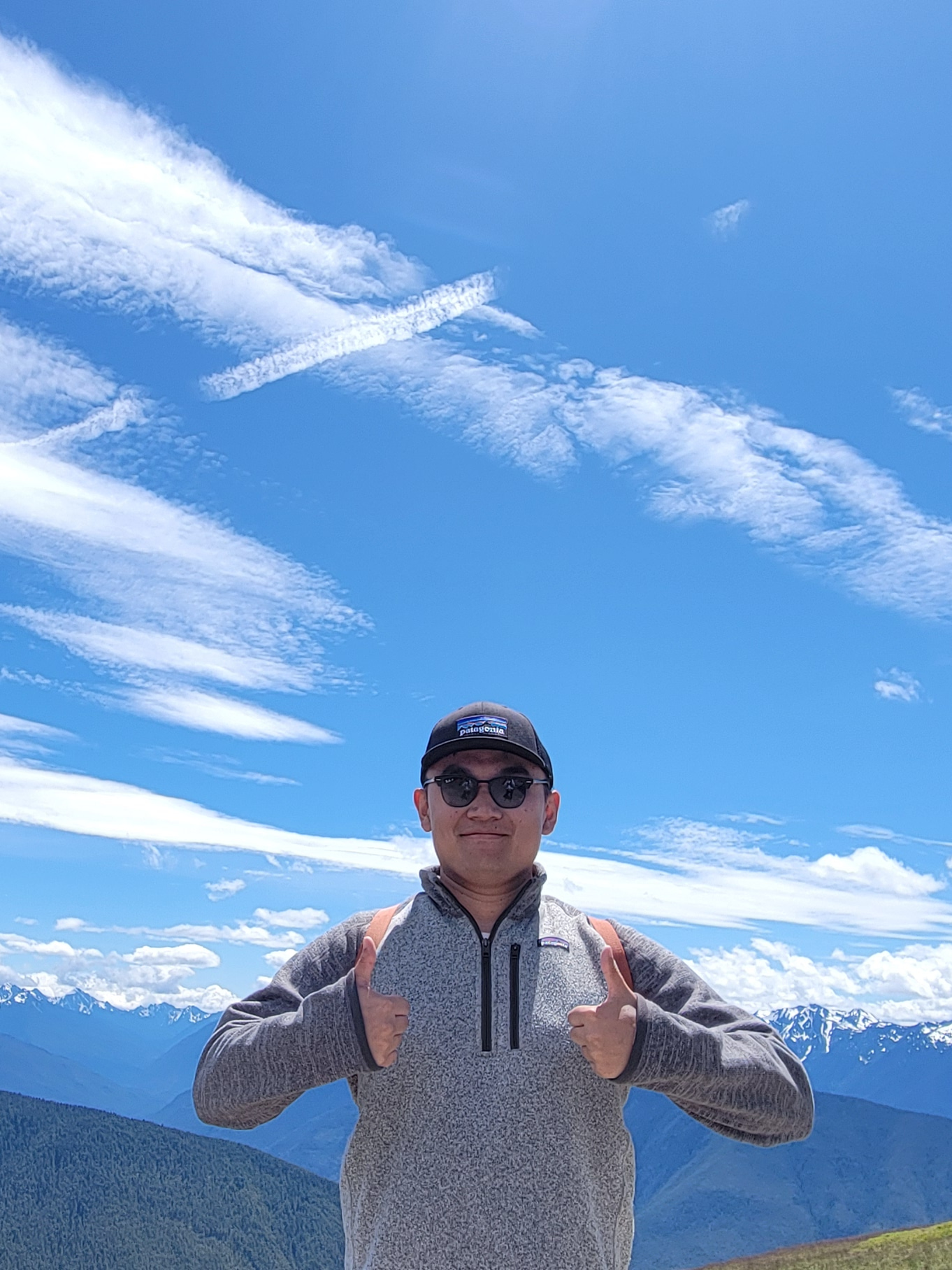
Yang Deng
Born in China, trained in optical engineering at Rochester, did a Ph.D. at Duke on ML for metamaterials, built simulation infrastructure in Boston — now exploring what's next.
My path into machine learning went through physics. I started in optical engineering — lenses, light, the mathematics of how electromagnetic fields behave in structured media. Ph.D. at Duke under Willie J. Padilla was where it all collapsed into one question: when the design space is enormous and the simulations are expensive, how do you find good designs fast?
That question turned out to be bigger than metamaterials. Surrogates, inverse design, Bayesian optimization, active learning — each a different way of stretching a simulation budget further. My thesis pushed a five-orders-of-magnitude speedup on one benchmark. My best papers are the ones that say clearly what would generalize and what wouldn't.
At an early-stage AI startup I built the infrastructure for that at production scale — connecting physics simulations to AI interfaces, writing the benchmarks that kept the agents honest. I joined as the 2nd engineer because the chance to shape something from near-zero matters more to me than most things.
Where I've been
Member of Technical Staff
2nd engineer. End-to-end product infrastructure; GPU-accelerated simulation kernels (RCWA/FDTD/FDFD); evaluation benchmarks for physics-oriented agent workflows.
Software Engineer · CEM & Photonics
Fabrication-tolerant design pipelines; Slurm + AWS; reduced runtime 20% via multi-proc.
Ph.D. · Electrical & Computer Engineering
Thesis: Machine Learning for Next Generation Metamaterials. Advisor: Dr. Willie J. Padilla.
B.S. · Optical Engineering
Questions I get asked
I worked on the layer that connects high-fidelity physics simulations to LLM-based agents — benchmark design, verification harnesses, GPU kernel integration. I joined as the 2nd engineer and helped bring on the 3rd.